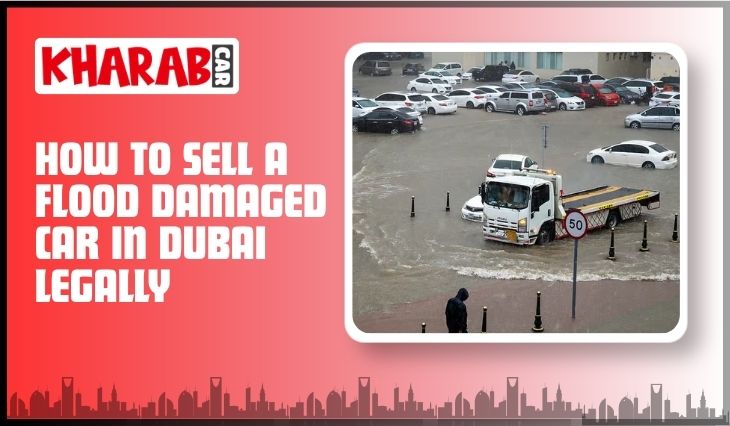
The water arrived way faster than anyone expected, like faster than real life should allow.
If your car got caught in the April 2024 UAE floods, or any other heavy rainfall since, you already know what it feels like to step into a car park and see your vehicle parked in about half a metre of water. The smell alone basically tells you the story is not going to end well.
What comes next is where most Dubai car owners get stuck. The insurance company calls it a write-off, ok. The repair quote looks higher than the car’s actual worth. And every private buyer on Dubizzle just vanishes the second you mention the word “flooded”, like it’s a forbidden term.
So, what are you really able to do next? And more importantly, how do you sell a flood-damaged car in Dubai without getting into legal trouble, or losing serious money at the same time?
This piece answers both things honestly, walks you through the correct legal path, step by step, and also shows how KharabCar.com turns the whole process into something straightforward for Dubai residents.
Why Is Selling a Flood-Damaged Car in Dubai More Complicated Than a Normal Sale?
Selling a flood-damaged car in Dubai is a bit more annoying in legal terms than a typical used car deal. Like, there are extra steps, plus the RTA system, the insurance write-off classification, and the ownership handover process; they all have to match up properly. If even one part is handled wrong, then the sale can just stall, and honestly, it can’t really move forward.
Water damage is different from a straight collision, kind of. In a front-end accident, you might get lucky, and the engine stays mostly fine, but with flooding, it goes into the electrical wiring, the seat fabric, under the chassis, and if it was really bad, it can reach the ECU itself. Because of that, the way the car is treated for resale changes, and insurers also document it in a particular way.
A lot of Dubai residents we’ve spoken to were honestly caught off guard when they realised their water-damaged car had already been flagged on the UAE traffic system, even before they showed it to any buyer. And it matters practically because:
- If the insurer declared the vehicle a total loss, then the insurance write-off Dubai status gets recorded, linked to the plate number.
- A buyer who checks the history through official channels will spot that record straight away.
- Trying to sell without full disclosure is not just an ethical problem; it’s a legal issue too.
- The ownership transfer through the RTA can’t be completed until the write-off status is either properly resolved or correctly acknowledged in the paperwork.
The good news, though, is that this does not automatically mean you cannot sell. It just means the process has defined steps, and if you follow them, it protects you properly, end of story.
What Counts as a Written-Off Vehicle Under UAE Traffic Law?
A vehicle gets classed as a write-off when the repair cost goes past some threshold percentage of its pre-damage market worth, usually sitting in the zone of about 50% to 60%, though the exact cutoffs vary from one insurer to the next. Once that call is made, the insurance company will most of the time take possession of the vehicle. However, if you stayed as the owner after a flood incident and you did not file an insurance claim, then it is different and honestly, a bit simpler.
How Does the Legal Process Work When You Want to Sell a Flood-Damaged Car in Dubai?
So the legal process of selling a damaged car in Dubai is basically a bit of a chain, four stages more or less: first, you confirm what the vehicle’s status is right now on the RTA system, then you sort out any insurance matter that is still pending, then you do the actual sale in a clear way to a registered buyer, and finally you handle the RTA ownership transfer the right way.
It helps a lot to do them in the right order. Like if someone skips straight to the sale without checking the RTA status first, that’s usually where the headaches begin. Not because the sale is impossible, but because the documentation ends up contradicting what is recorded. and the buyer later asks for more.
This is the way it typically plays out in real life, not just theory:
- First, check your vehicle’s status via the RTA Dubai app or through the Dubai Police vehicle history portal. This shows what is logged against your plate number before you talk to any buyer or start negotiations.
- Second, if your insurer has already declared the car a total loss, contact them and ask for clarification on whether they have taken legal ownership of the vehicle or if you still have the right to sell it.
- Third, if you still have the Mulkiya and the car remains in your name, you can move forward with selling to a specialised flood-damaged car buyer in the UAE, like KharabCar.com. This is the part where you want someone who already understands what “flood-damaged” means in paperwork terms.
- Fourth, complete the RTA ownership transfer through the normal channels, with all parties there and with the documents ready and aligned. no missing pages, no “we’ll bring it later” kind of situation.
- Fifth, collect your payment only after the transfer is confirmed, and the car is legally out of your name. Otherwise, you are basically still tied to it, legally speaking.
And yes, KharabCar.com takes care of steps three through five for you. You do not need to go visit the traffic department by yourself or try to decode the paperwork with no guidance.
What Documents Do You Need to Sell a Flood-Damaged Car in Dubai?
You will need your Emirates ID, the original vehicle registration card (Mulkiya) and your UAE driving licence. If the car was under a bank loan, you will also need the bank clearance letter or a confirmation that the remaining balance will be settled from the sale proceeds. Having any insurance correspondence about the flood damage is also helpful, though not always required, sometimes.
Can KharabCar Buy Your Car If the Engine Is No Longer Running?
Yes. Non-running flood-damaged cars are being assessed and bought on a pretty regular basis. A car that will not start because water got into the electrical system or the engine still tends to carry parts value, scrap value, and in lots of cases, even more residual market value than sellers are really thinking. During the inspection, they’ll map what’s going on in an accurate way, and the offer will line up with that, honestly.
What Are the Most Common Mistakes Dubai Car Owners Make When Selling a Flood-Damaged Vehicle?
The most frequent mistakes people make when selling a water-damaged car in Dubai really sort of boil down to two things. First, not checking the car’s legal standing before you start talking with buyers, and second, accepting the first offer without actually understanding what the vehicle is worth in the real world.
Good news, though, both of these are entirely avoidable if you do a little bit of groundwork.
We’ve seen sellers in Dubai take scrap-level prices for cars that still had real residual value, just because they didn’t run a proper online car valuation in the UAE before entering conversations. With flood damage, there’s always that sudden pressure, and the pressure is what gets taken advantage of.
Here are the types of errors you should try to avoid, basically:
- Selling to an unlicensed buyer who cannot legally finish an RTA ownership transfer. In that case, the car can stay in your name even after you’ve already been paid.
- Not telling a private buyer about the flood damage history. That’s a legal headache later on, especially if the buyer argues they were not properly informed.
- Not getting a written offer before you hand over documents or keys.
- Thinking the car has no value simply because an insurance company said so. Insurers and specialist buyers use different valuation methods altogether.
Is It Legal to Sell a Flood-Damaged Car to a Private Buyer in Dubai?
It is legal, as long as the damage history is properly disclosed, and the RTA transfer gets done the right way, start to finish. If someone sells a flood-affected vehicle without telling it first, then it becomes a totally different story, and it can easily turn into a legal dispute. For most sellers, the safest route feels like working with a specialist buyer like KharabCar.com, because the whole process is recorded, and there is clear transparency from the very beginning.
Does the Age of Your Car Affect How Much You Can Expect From a Flood-Damaged Sale?
Age matters, but it doesn’t do all the heavy lifting, you know. A five-year-old SUV, with noticeable flood damage, will often get more than a ten-year-old sedan in a comparable situation. But then again, mileage counts, and the car service history matters too, plus the brand, and how deep the water actually got. KharabCar.com looks at all of those points during the physical inspection, instead of just using one blanket formula that kinda ignores everything else.
When Is the Right Time to Sell Your Flood-Damaged Car Rather Than Attempt a Repair?
The right time to sell a flood-damaged car instead of repairing it is usually when the honest repair cost goes past something like 40% to 50% of the vehicle’s pre-flood market value. Then, even if the repair works, you still end up with a car whose resale value has been meaningfully shaped by its past, and you’ve already sunk real money into it.
It’s really worth doing this number crunching before you commit to anything. A lot of car owners in Dubai skip it, for reasons that are kind of emotional, as they feel attached to the vehicle, or they think the repair will fully bring back its worth. But in most situations with flood car damage in the UAE, it doesn’t.
After the 2024 UAE flooding, some repair workshops in Dubai mentioned backlogs of several weeks for flood-affected vehicles. A few cars that were left unrepaired for extended periods developed extra complications, especially with mould, corrosion, and slow, continued electrical degradation. Basically, the longer you leave a flood-damaged car hanging, without a real decision, the lower its value tends to drop.
So selling sooner instead of later is almost always the better financial move. KharabCar.com can finish a valuation within a few hours after your enquiry.
Conclusion
Selling a flood-damaged car in Dubai legally it is possible, and it does not really have to be a big deal. The trick is, you should know what your car’s current legal status is before you talk to any buyer, plus you need to be open about the whole damage story. Also, it helps a lot to work with a specialist who can manage the RTA steps properly, from the very first stage to the last one, not “sort of” in the middle.
KharabCar.com helps you with flood-damaged and water-damaged cars in Dubai and the wider UAE. There are no repair requirements, no paperwork stress, and you get a clear offer before you commit. If your car was affected by the floods and you feel ready to move on, go to KharabCar.com now, send your vehicle details, and receive your free online car valuation within hours.